
Bench Warrants in Matagorda County
A bench warrant is judge-directed process tied to an existing court obligation. In Matagorda County, a missed court date, failure to answer a citation, noncompliance with a judgment or payment plan, or contempt issue may lead to a court action. The exact term depends on the case and court.
JP and municipal cases may use the more specific term capias pro fine when a fine or cost judgment remains unsatisfied. Family, truancy, and jury matters follow distinct rules. Ask the clerk what order was issued before assuming that a traffic-court remedy applies.
Bay City Capias Docket Terms
Bay City’s Court Dates & Dockets page groups settings under labels that include Capias, Compliance, Show Cause, Bench Trial, and Pretrial. These are useful clues to the court’s workflow, but a heading does not confirm the current status of a person’s case. Call Municipal Court at 979-245-0035 and ask what the setting requires.
A show-cause setting may ask why a court order was not met. A compliance setting can relate to a condition or payment. A capias label can concern an arrest order tied to the underlying case. The clerk can explain whether an appearance, payment, motion, or other judge action is needed.
The Bay City docket page illustrates the local setting names discussed above.
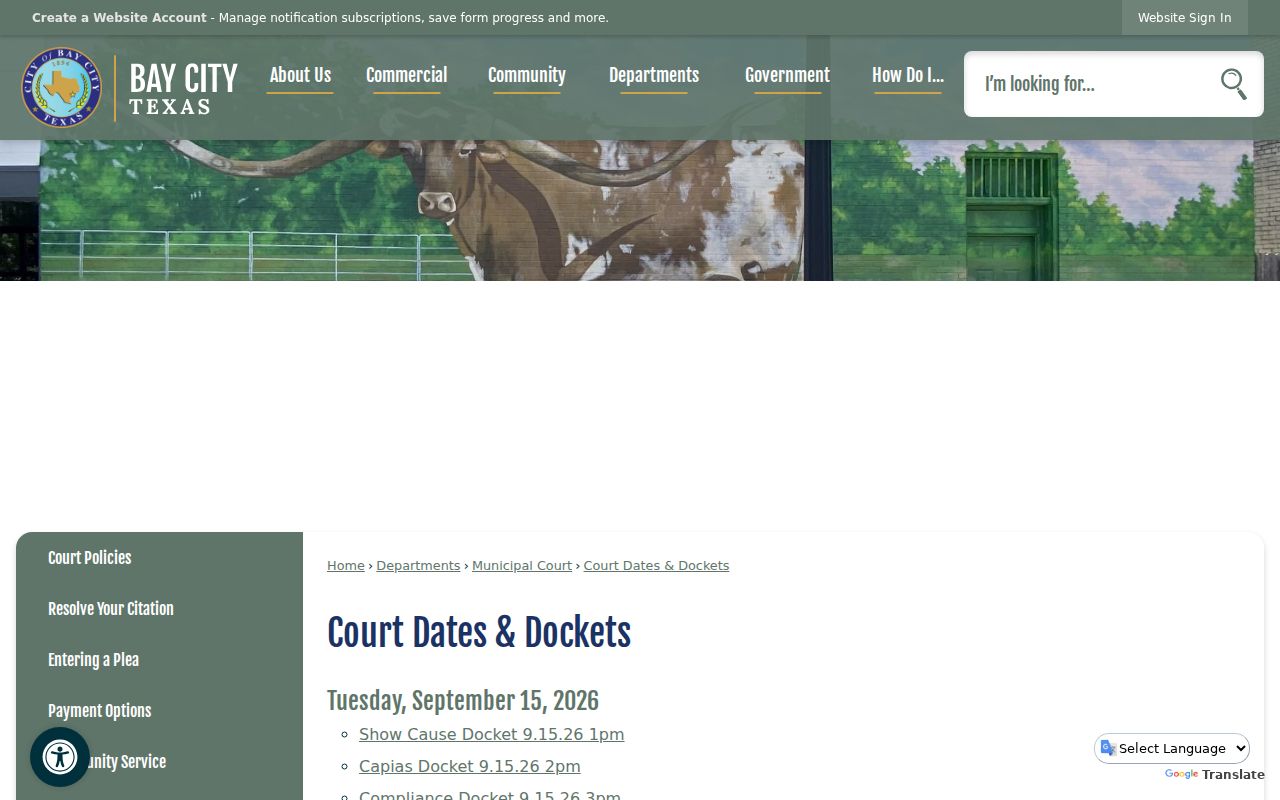
The city publishes docket categories without a public warrant roster. Verify a specific case with the court.
How a Matagorda County Bench Warrant Is Issued
The court with the case decides whether a missed obligation requires a warrant or another setting. The clerk maintains the court record; the Sheriff, a constable, city police, or another authorized peace officer may serve the process. There is no single county list that every court feeds.
After the judge signs an order, ask the clerk for the process type, date, cause or citation number, and current status. A warrant can remain open until the court recalls or quashes it, the order is served, or the court otherwise clears the obligation. A docket entry alone may not show those later steps.
JP2 Bench Warrant Walk-In Limits
JP2 publishes a second-Wednesday walk-in session for eligible Class C matters at 2200 7th Street, fourth floor, Bay City. The posted check-in opens at 9:30 a.m. and closes exactly at 10 a.m. Valid ID and case paperwork are required. Call 979-863-2035 to confirm the current date and whether the case qualifies.
Felony and Class A/B warrants are excluded. The judge may hear a plea, set a trial, or consider available payment and fine alternatives. After the hearing, the participant must sign the order at the clerk’s window; the JP2 notice warns that failing to complete that step can result in a new warrant. This program is specific to JP2.
The JP2 walk-in notice is the source for its schedule and limits.
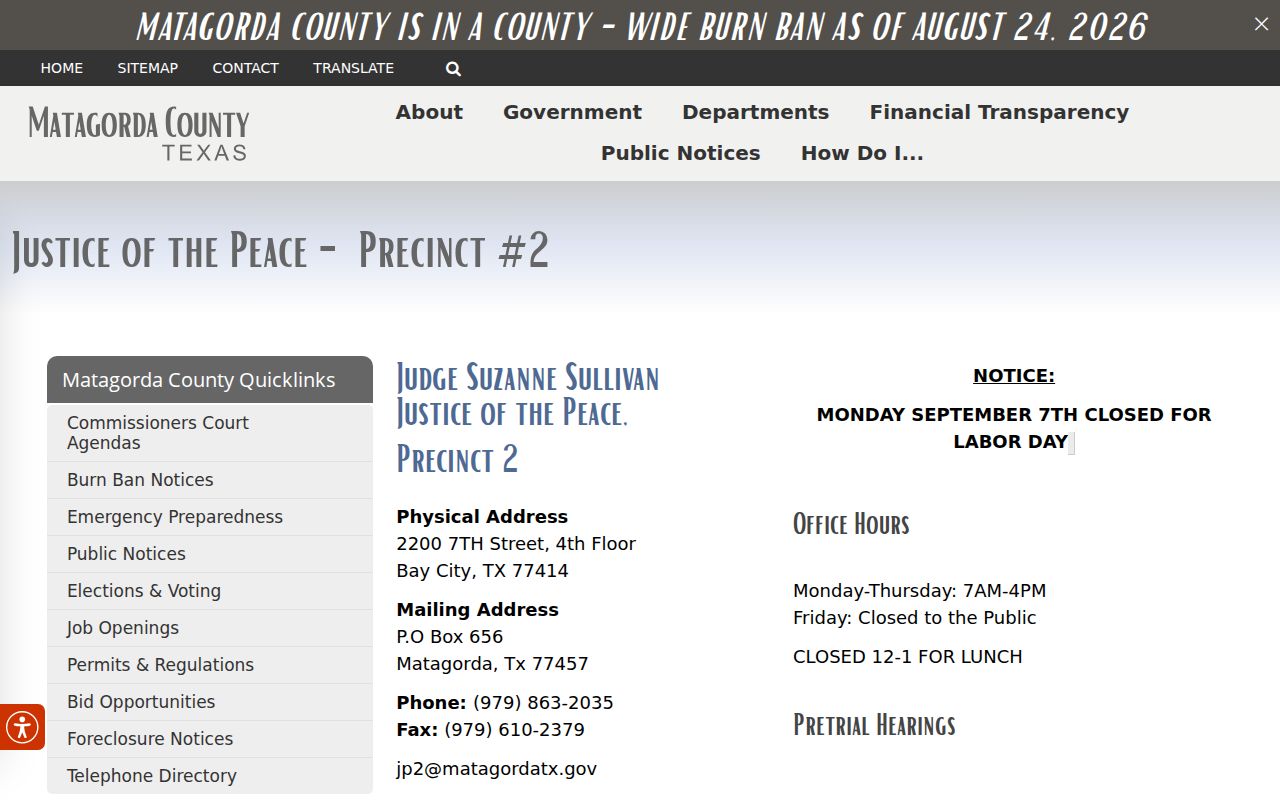
The precinct’s notice lists its own eligibility and check-in rules. Other courts publish separate procedures.
Bench Warrant vs Arrest Warrant
A bench warrant addresses an existing court obligation, such as a missed setting or noncompliance. An arrest warrant follows a probable-cause process for an alleged offense. Both can authorize an arrest, but the underlying case and the route to resolve the order differ. The court file identifies which one applies.
The arrest-warrant process is separate from a JP capias pro fine, which concerns an unpaid fine or costs judgment under Texas Code of Criminal Procedure Chapter 45A.
| Feature | Bench Warrant | Arrest Warrant |
|---|---|---|
| Trigger | Missed setting, contempt, or court noncompliance | Sworn complaint and probable-cause review |
| Who issues it | Judge in the existing case | Magistrate authorized for the case |
| Underlying case | Existing case or judgment | Criminal investigation or charge |
| How it clears | Issuing court action, appearance, or recall | Issuing court, counsel, bond, or other order |
Matagorda Capias Pro Fine
Texas Code of Criminal Procedure Chapter 45A covers the JP and municipal-court capias pro fine. It is tied to a fine or cost judgment that has not been satisfied, unlike a probable-cause arrest warrant for a new offense. The statute describes the amount owed and court appearance in the capias process, and allows recall after notice for a hearing or a voluntary appearance with a good-faith effort to resolve the obligation.
Ask the court whether the issue is an unpaid judgment, missed date, or both. A license-renewal hold reported through OmniBase is a separate FTA/FTP process and does not itself prove a warrant exists.
Read Texas Code of Criminal Procedure Chapter 45ARead the full Chapter 45A text for the statutory language.
Chapter 45A is the statutory source for the JP and municipal capias process.
How to Resolve a Bench Warrant
Contact the clerk for the issuing court before paying or appearing. Ask whether the court accepts a voluntary appearance, needs an attorney-filed motion, or has a specific capias, compliance, or walk-in setting. Matagorda County does not publish a universal bench-warrant amount or jail bond-window schedule.
- Confirm the issuing court, cause number, process type, status, and any next date.
- Ask whether counsel can arrange a walk-through, surrender, or motion to recall or quash.
- Confirm the exact bond or reinstatement amount and where an authorized payment is accepted.
- Complete the hearing or resolution, sign all required orders, and request written confirmation.
Caution: Do not assume a walk-in is available or that a payment alone recalls the order; confirm the court’s instructions first.
Matagorda County Recall Record Trail
After a court resolves the missed obligation, keep the signed order, receipt, and notice of the next setting. Ask whether the clerk has updated Odyssey, whether a serving agency needs a return or recall notice, and whether an FTA/FTP report must be cleared separately through the reporting court. An order can be complete before each linked system displays the change.
JP2 requires an additional clerk-window signature after the judge’s action. That detail is a practical warning: completing a hearing does not always finish the court’s paperwork. For another precinct or a city court, ask that clerk for its own final steps.
Which Matagorda County Court Issued It
The case type points to the right clerk. District Court handles felony cases; County Court handles misdemeanors. Traffic and fine-only matters may belong to JP1, JP2, JP3, JP4, or JP6. Bay City and Palacios Municipal Courts keep separate city cases. The Sheriff may serve an order, but the issuing court controls recall, reset, or payment terms.
Use the court printed on the citation or notice. If that paper is missing, the county’s warrant search steps explain which clerk and phone route fits each case. Do not contact a judge directly about a pending matter; the JP pages direct questions to court staff.
The 130th Court Posts a Local Bond and Surrender Order
The 130th District Court forms page includes a standing order addressing bonds, surrenders, and forfeitures. It is a court-specific source and does not establish the procedure for a different district, JP, or municipal case.
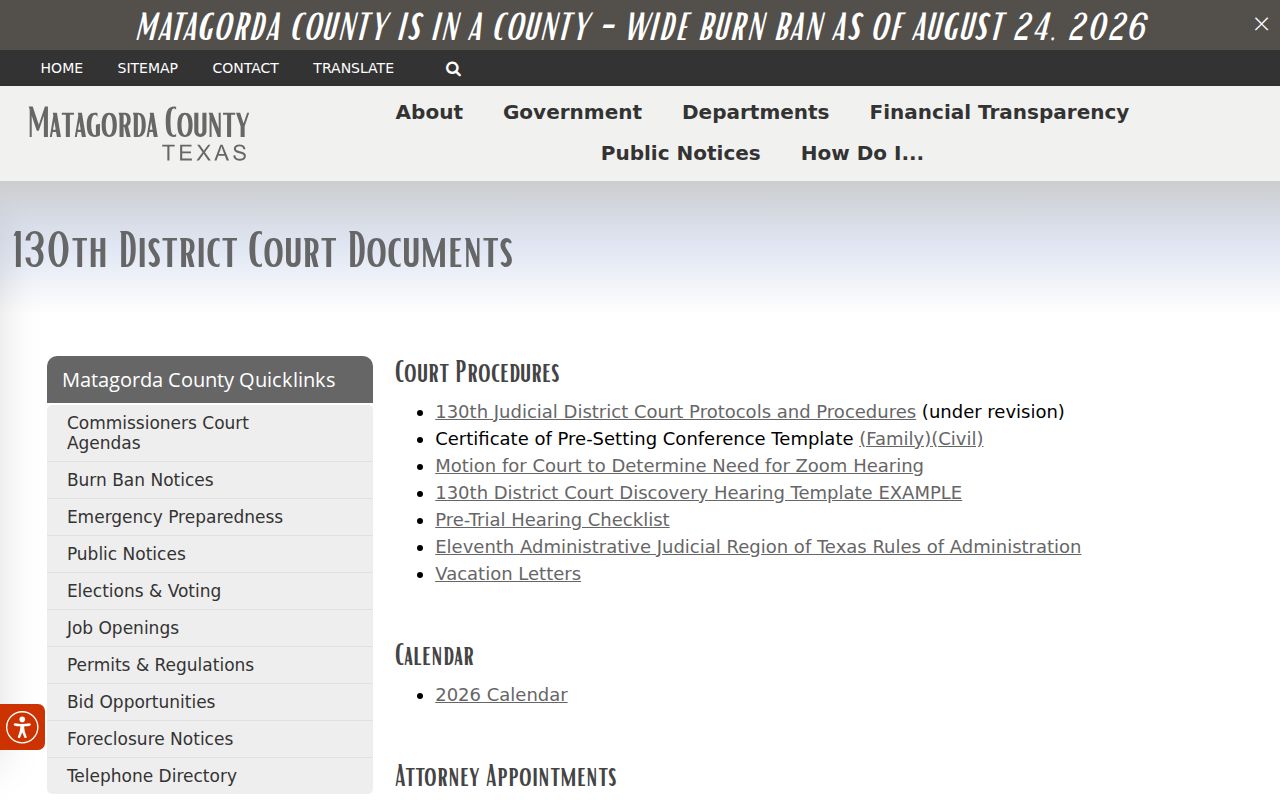
Confirm with the clerk for the issuing court whether that order applies to a particular case.